Choosing a Commercial-Grade Outdoor Sink for Restaurants in 2026
Key Considerations Before Buying an Outdoor Sink
Material & Durability
| 304 Stainless Steel | Good corrosion resistance, affordable, food-safe | Can show water spots, may rust in coastal areas | Standard outdoor areas with moderate exposure |
| 316 Stainless Steel | Superior corrosion resistance, ideal for saltwater exposure | Higher cost, heavier weight | Coastal restaurants, harsh environments |
| Galvanized Steel | Very affordable, decent durability | Less attractive, can rust over time | Budget installations, temporary setups |
| Composite Materials | Lightweight, resistant to staining | Less durable, not always NSF certified | Light-duty applications, seasonal use |
Size & Configuration
The size and configuration of your commercial outdoor sink should align with your specific operational needs and available space. Consider how the sink will be used—food prep, handwashing, or dishwashing—to determine the appropriate configuration.
Single Bowl Configurations
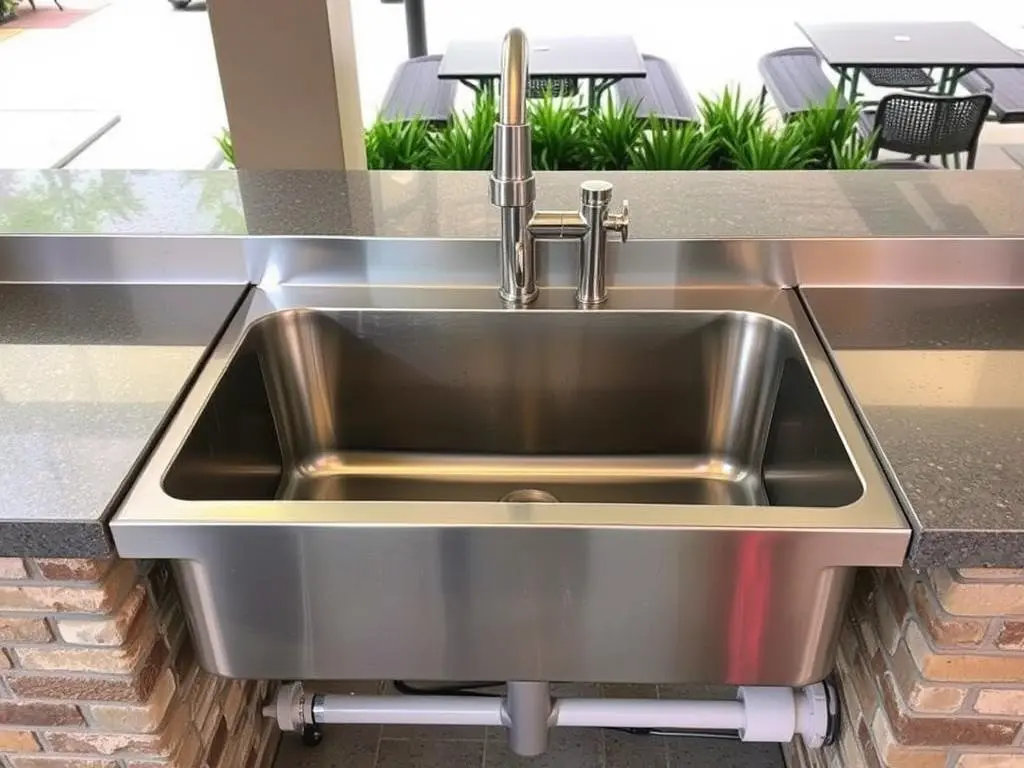
- Space-saving design (typically 18″-24″ wide)
- Ideal for handwashing stations
- Good for limited prep work
- Recommended depth: 10″-14″
- Minimum countertop space: 24″ x 24″
Multi-Bowl Configurations
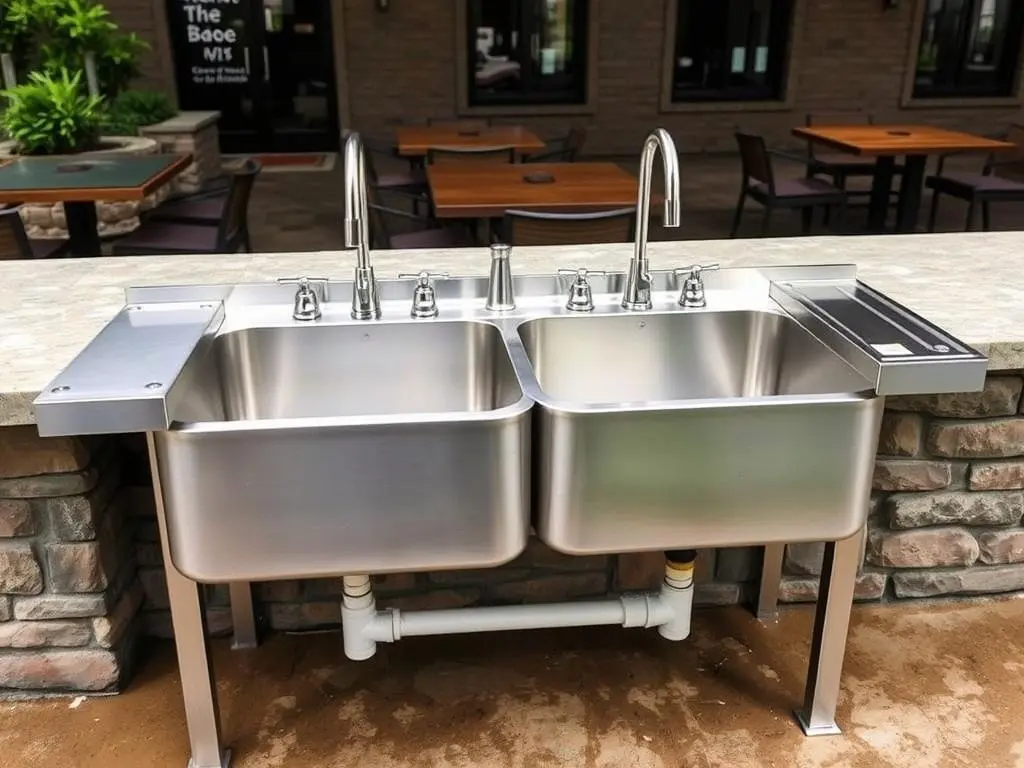
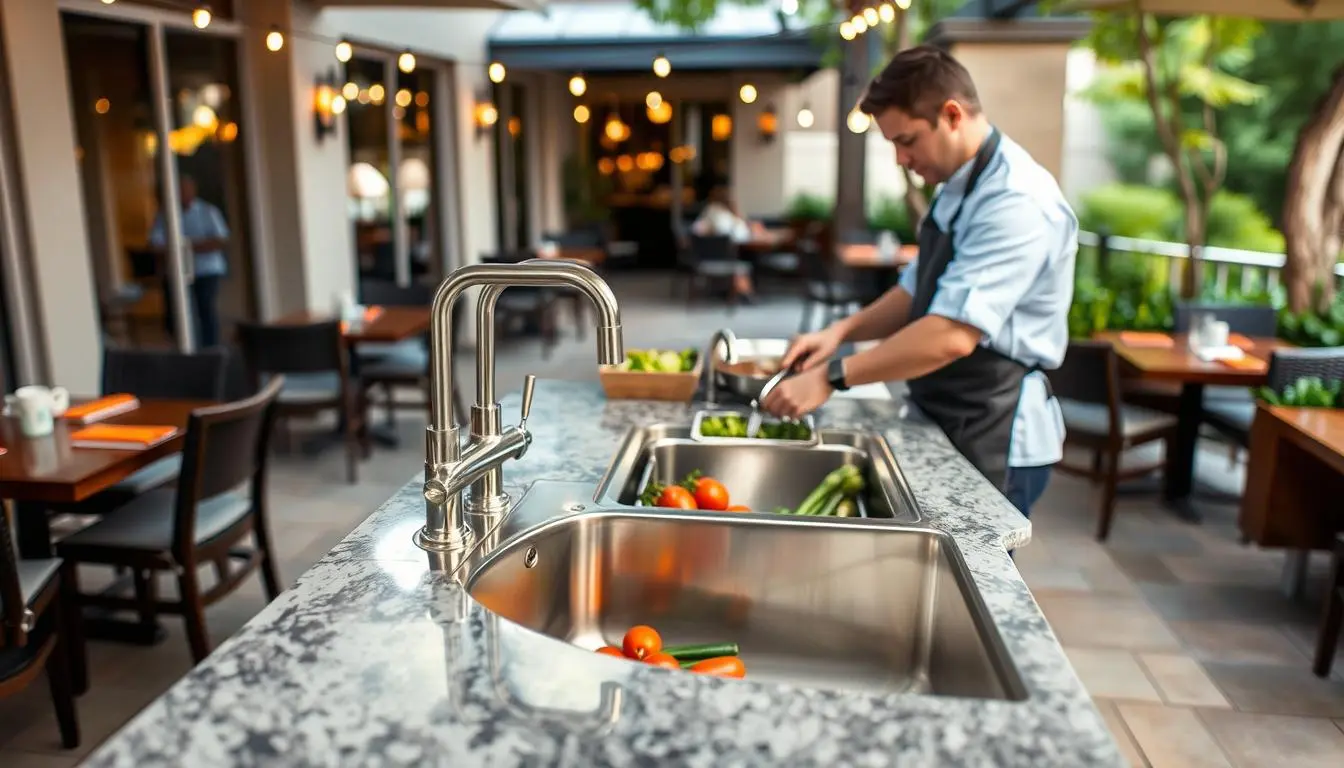
- Use two or three bowls for washing, rinsing, and sanitising.
- This setup meets health department requirements.
- The typical width ranges from 36 to 72 inches, depending on how many bowls you have.
- Standard bowl sizes usually range from 14 by 16 inches to 18 by 24 inches.
- Minimum countertop space: 48″ x 24″ (double bowl)
Drainage & Plumbing
- Make sure the drain slopes at least a quarter inch per foot for proper water flow.
- Install a P-trap to prevent odours and comply with plumbing codes.
- If you use the sink for food prep, consider adding a grease trap.
- In colder areas, use frost-free drains and insulated pipes.
- Check your local codes for rules on graywater disposal.
- Ensure your setup includes proper venting to prevent drainage problems.
Health Code Compliance
What NSF/ANSI standards apply to outdoor commercial sinks?
What are the typical health department requirements?
- Three-compartment design for washing, rinsing, and sanitizing
- Hot water capacity (minimum 110°F for handwashing, 140°F for sanitizing)
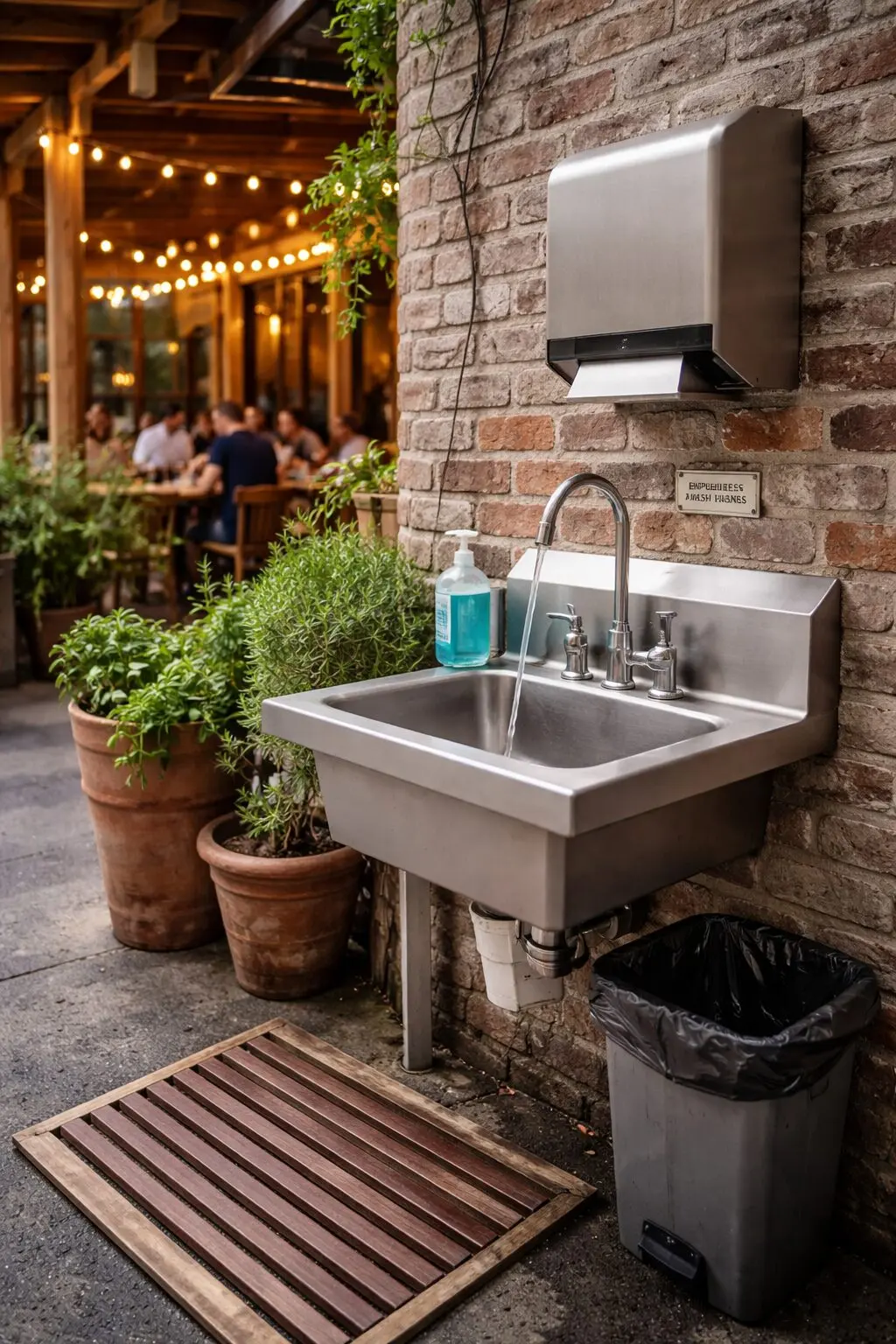
- Separate handwashing station with soap and paper towel dispensers
- A proper drainage system connected to an approved sewage disposal system
- Splash guards between food prep areas and washing stations
Do outdoor sinks need different certifications than indoor ones?
Installation & Mounting Options
i- Wall-Mounted
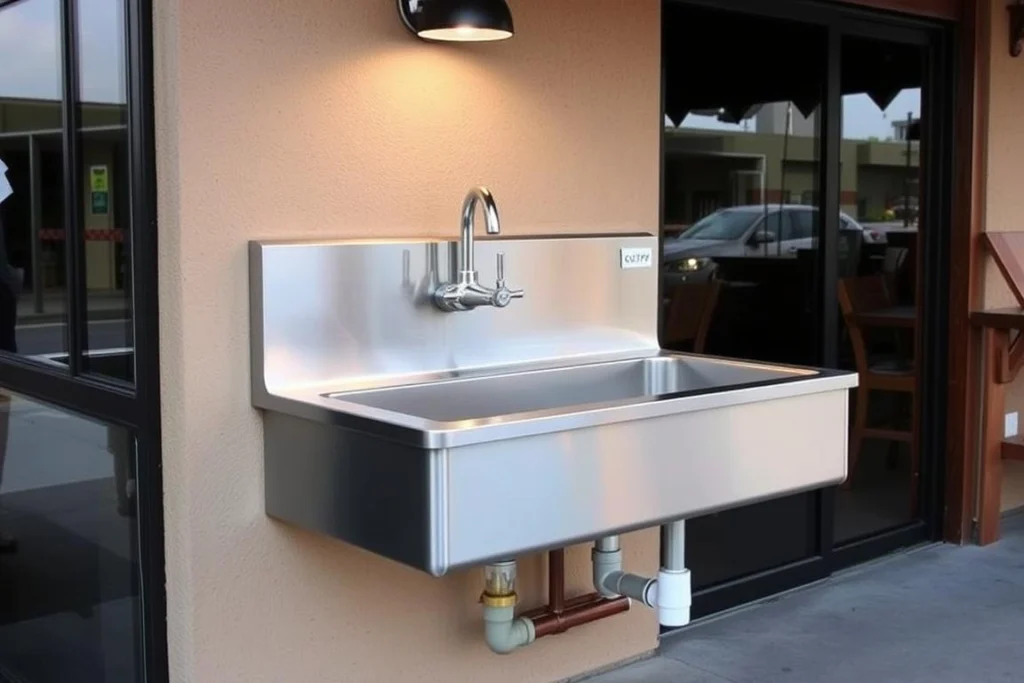
- Space-saving design
- Easier floor cleaning
- Requires a sturdy exterior wall
- Best for handwashing stations
ii- Freestanding
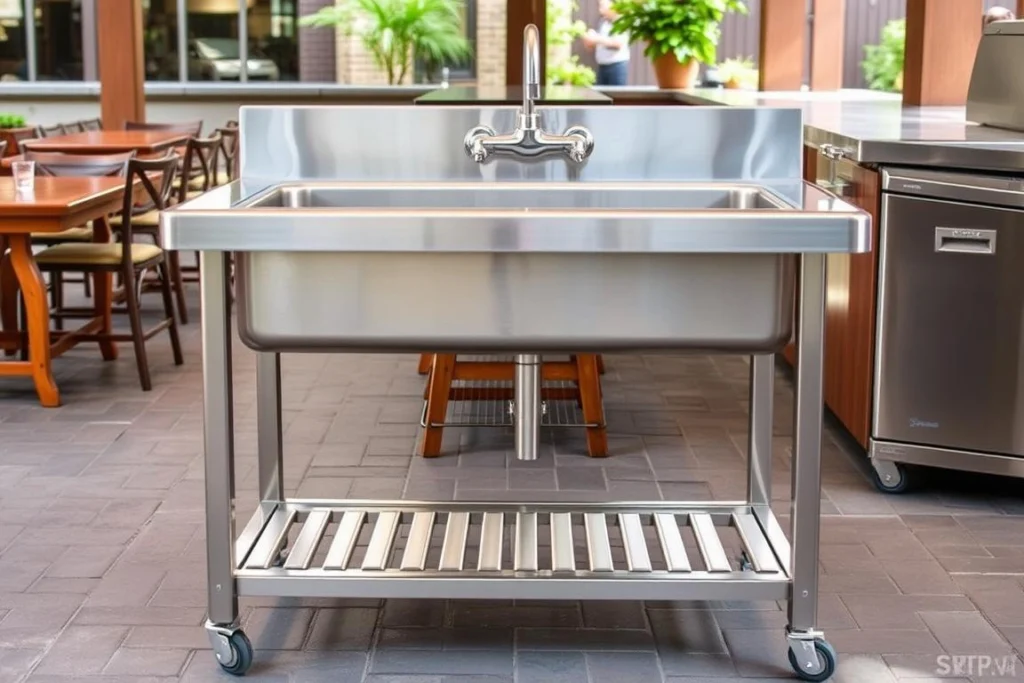
- Flexible placement options
- Often includes storage shelves
- Requires a level surface
- Ideal for multi-compartment sinks
iii- Built-In/Countertop
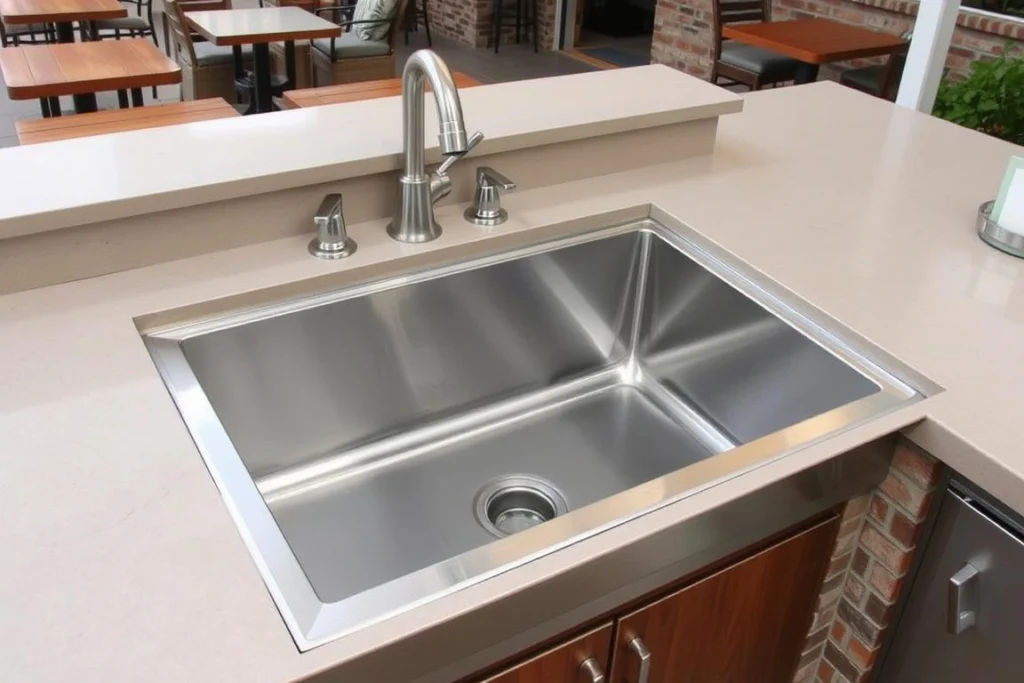
- Seamless, professional appearance
- Maximum counter workspace
- Complex installation process
- Perfect for permanent outdoor kitchens
Installation complexity varies significantly between mounting options. Freestanding units offer the simplest setup but may require additional stabilization. Wall-mounted sinks need proper structural support, while built-in models demand professional installation to ensure proper sealing and drainage.
Top Features to Look For in Commercial-Grade Outdoor Sinks
Beyond the basic considerations, certain features can significantly enhance the functionality and longevity of your outdoor sink installation. These elements can improve workflow efficiency and ensure your investment continues to perform in demanding commercial environments.
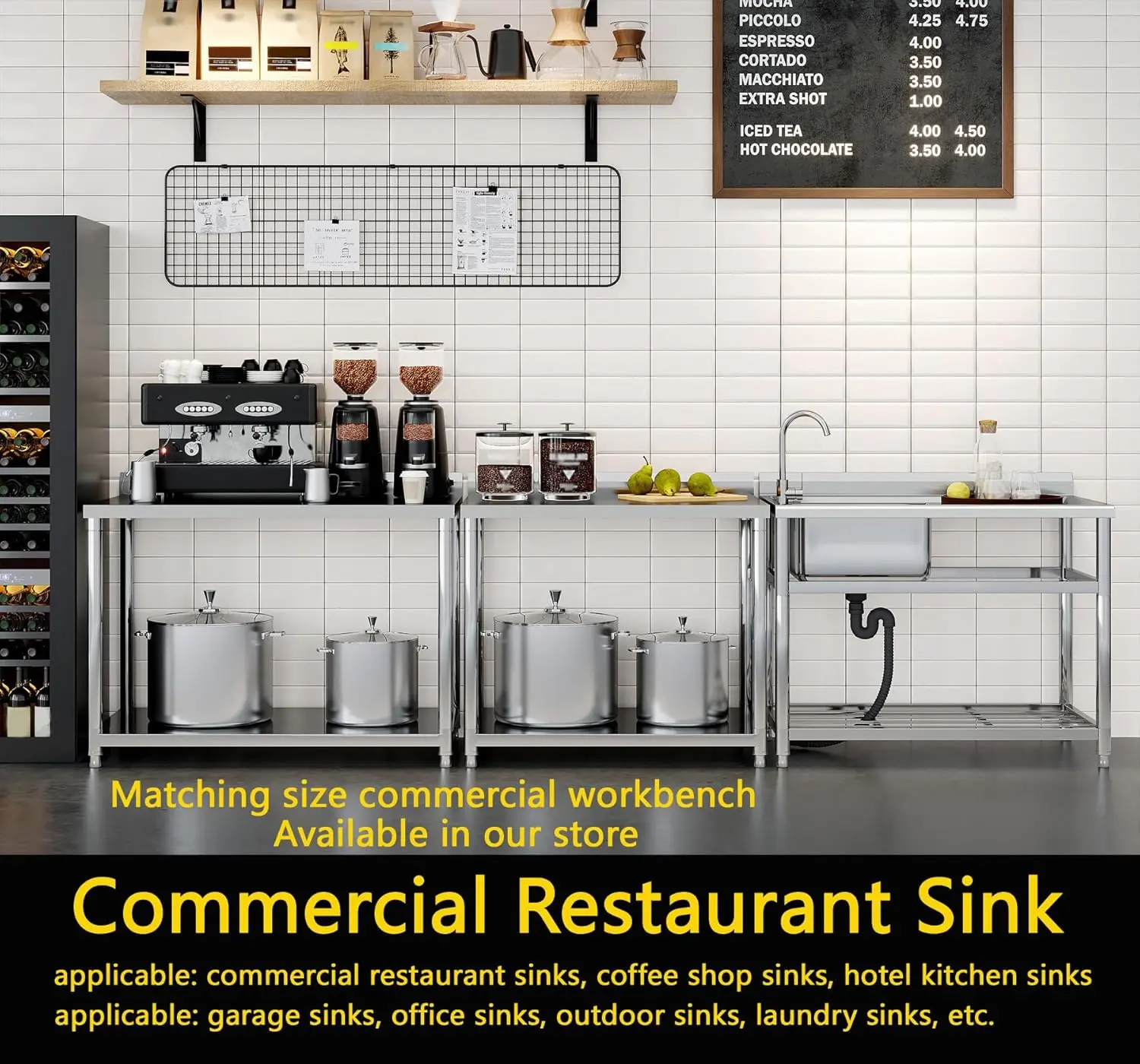
Faucets & Water Supply
The right faucet can dramatically improve workflow efficiency and water conservation in your outdoor sink setup.
Pre-Rinse Sprayers
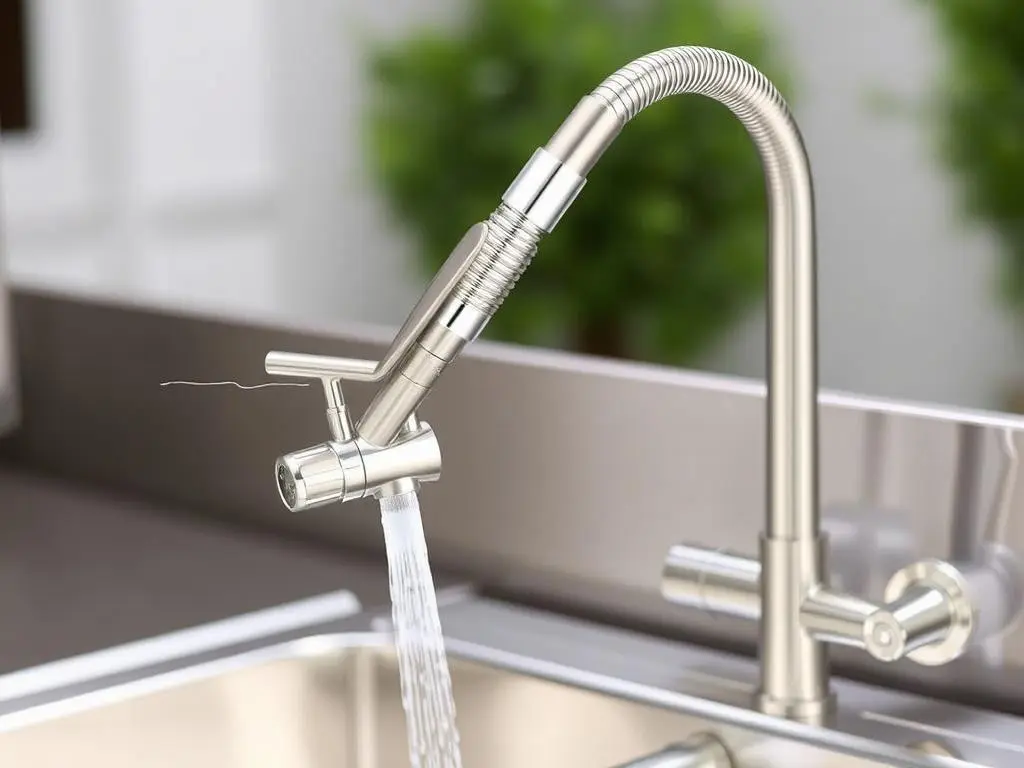
- High-pressure spray for efficient cleaning
- Flexible hose for targeted rinsing
- Reduces water consumption
- Look for models with at least 1.2 GPM flow rate
Foot/Knee Pedal Operation
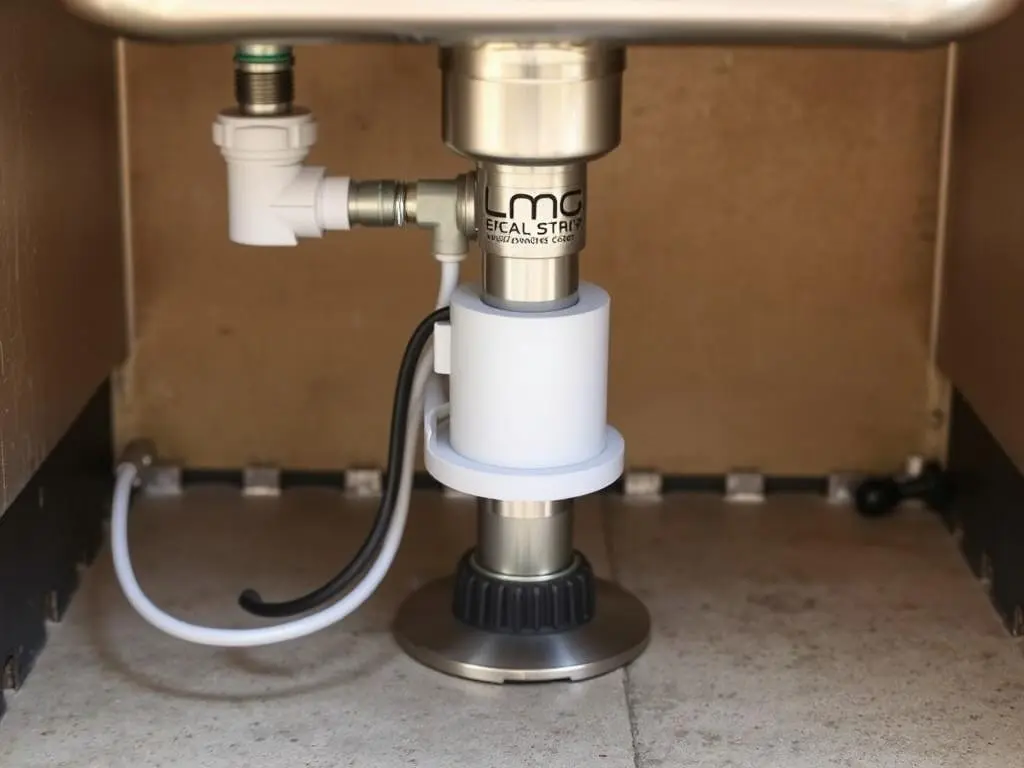
- Hands-free operation improves sanitation.
- Reduces cross-contamination
- Water conservation through controlled flow
- Essential for dedicated handwashing stations
When selecting a faucet for outdoor use, choose models with ceramic disc valves rather than rubber washers, as ceramic disc valves better withstand temperature fluctuations. If your outdoor sink is distant from the primary hot water source, consider installing a separate water heater.Backsplash & Splash Guards
Splash protection helps keep your area sanitary and protects nearby outdoor surfaces.
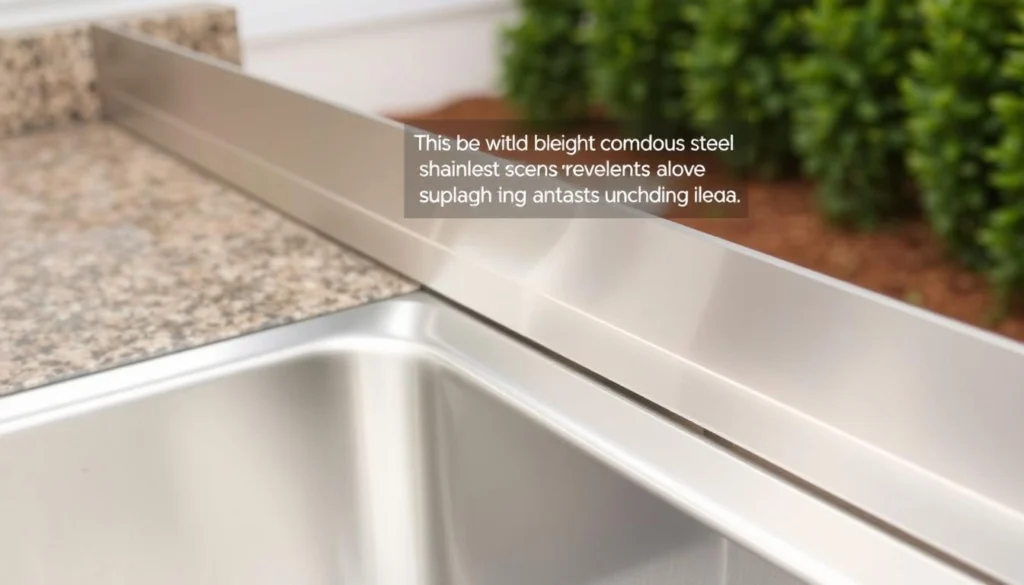
- A backsplash that is 8 inches high is recommended for commercial use.
- Side splash guards prevent damage to nearby equipment.
- Seamless construction eliminates crevices where bacteria can accumulate.
- Marine-grade caulking for outdoor installations
- Removable splash guards make cleaning easier.
Storage & Accessories
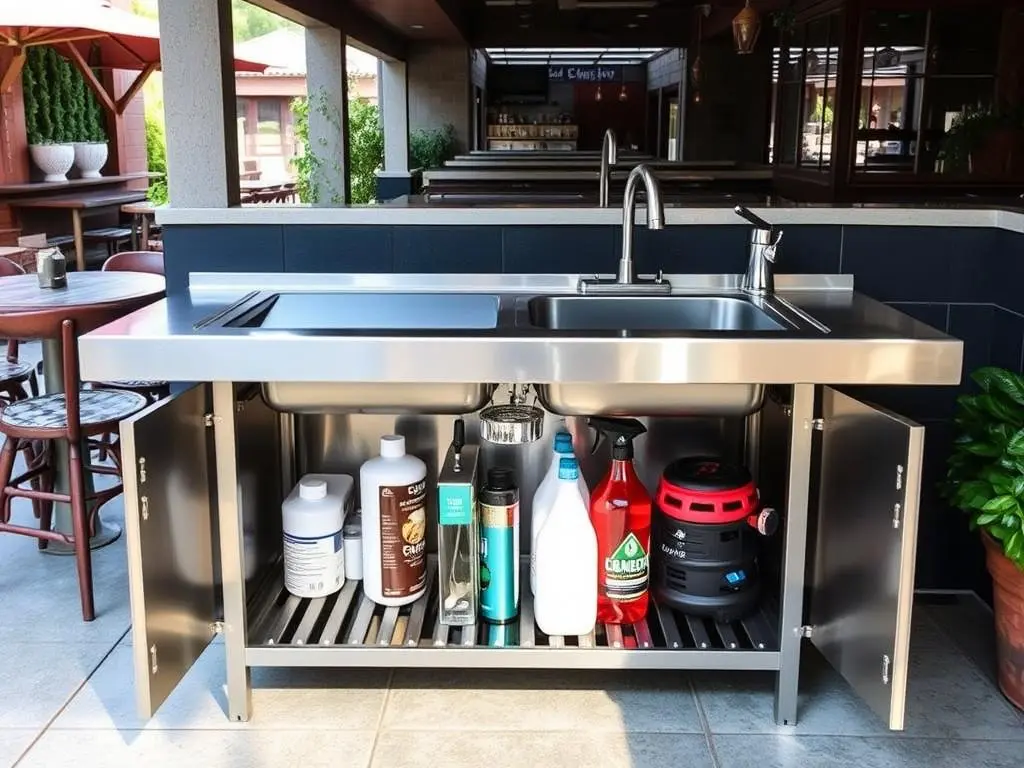
Essential Storage Features
- Undershelf storage for cleaning supplies
- Utensil hooks for frequently used tools
- Knife racks for food preparation stations
- Towel bars for quick access to cleaning cloths
- Lockable cabinets for chemical storage
Recommended Accessories
- Drain boards for air-drying equipment
- Cutting board attachments for prep stations
- Soap and sanitizer dispensers
- Paper towel holders for handwashing stations
- Waste bin attachments for efficient cleanup
When selecting storage options for outdoor sink stations, prioritize open designs that allow for air circulation and prevent moisture buildup. Solid cabinets can trap moisture and promote mold growth in outdoor environments.
Ease of Cleaning & Maintenance
Commercial-grade outdoor sinks should be designed for efficient cleaning and minimal maintenance requirements.
Essential Storage Features
- Undershelf storage for cleaning supplies
- Utensil hooks for frequently used tools
- Knife racks for food preparation stations
- Towel bars for quick access to cleaning cloths
- Lockable cabinets for chemical storage
Recommended Accessories
- Drain boards for air-drying equipment
- Cutting board attachments for prep stations
- Soap and sanitizer dispensers
- Paper towel holders for handwashing stations
- Waste bin attachments for efficient cleanup
- Coved corners, or rounded inside edges, help keep food particles from building up.
- Seamless construction eliminates hard-to-clean crevices.
- Removable drain strainers make it easy to clear debris. A brushed finish helps hide water spots and fingerprints. sink bottoms ensure all water drains out.
- Removable backsplashes for thorough cleaning access
Maintenance tip:
.
Find the Perfect Commercial-Grade Outdoor Sink
Please browse our selection of NSF-certified commercial sinks designed specifically for outdoor restaurant environments.
Budgeting & Cost Analysis for Commercial Outdoor Sinks
Understanding the full cost implications of purchasing and installing a commercial-grade outdoor sink helps restaurant owners make financially sound decisions that balance immediate budget constraints with long-term operational needs.

Initial Purchase Costs
Commercial-grade outdoor sinks vary significantly in price based on size, material quality, and features. Understanding these price tiers helps set realistic budget expectations.
| Quality Tier | Price Range | Features | Best For |
| Economy | $300-$800 | Basic single-compartment, lighter-gauge steel, standard faucet | Seasonal operations, limited budget, light use |
| Mid-Range | $800-$1,500 | Double compartment, 16-gauge steel, drainboard, basic storage | Year-round operations, moderate use |
| Premium | $1,500-$3,000 | Three-compartment, 14-gauge steel, pre-rinse faucet, extensive storage | High-volume operations, full outdoor kitchens |
| Custom | $3,000+ | Custom configurations, 316 stainless steel, integrated systems | Luxury establishments, coastal locations, specialized needs |
Installation & Additional Costs
The purchase price is just one component of the total investment. Installation and supporting infrastructure often represent significant additional expenses.
Installation Expenses
- Professional plumbing: $500-$1,500
- Electrical work (for water heaters): $300-$800
- Concrete pad or flooring: $200-$600
- Drainage system: $400-$1,200
- Permits and inspections: $100-$500
Supporting Infrastructure
- Water heater: $300-$1,000
- Grease trap: $200-$800
- Winterization equipment: $100-$400
- Water filtration system: $200-$600
- Weather protection (canopy/enclosure): $300-$2,000
Budget Tip: Many restaurant equipment suppliers offer package deals that include installation services. While these may appear more expensive initially, they often provide better value by ensuring proper setup and may include warranties that cover both equipment and installation.
Long-Term Cost Considerations
The total cost of ownership extends beyond the initial purchase and installation. Consider these ongoing expenses when budgeting for your commercial outdoor sink.
- Water usage: $10-$50 monthly, depending on volume
- Heating costs (for hot water): $15-$60 monthly
- Cleaning supplies: $20-$40 monthly
- Maintenance and repairs: $100-$300 annually
- Replacement parts (faucets, drains): $50-$200 annually
- Winterization services (cold climates): $100-$200 annually
Investing in higher quality initially often results in lower long-term costs. Premium stainless steel sinks may cost 30-50% more upfront, but can last twice as long as economy models, require fewer repairs, and maintain a better appearance.
“Investing in a high-quality commercial-grade outdoor sink was one of the best decisions we made for our patio expansion. The durability and functionality have far outweighed the initial cost, and our staff appreciates having proper facilities right where they need them.”
Conclusion: Making the Right Investment
Selecting the appropriate commercial-grade outdoor sink for your restaurant involves balancing immediate budget constraints with long-term operational needs. By carefully considering material quality, size requirements, plumbing infrastructure, and compliance standards, you can make an informed decision that enhances your outdoor dining operations for years to come.
Remember that a commercial outdoor sink is not merely a convenience but an essential component of health code compliance and operational efficiency. The right sink will streamline workflow, maintain sanitation standards, and contribute to a professional outdoor dining experience for your customers.
Whether you opt for a simple handwashing station or a complete three-compartment system with integrated prep areas, prioritize quality construction, proper installation, and ongoing maintenance to maximize your return on investment.
Related Article
1- How to Choose the Best Outdoor Sink for Your Space
2- How to Install an Outdoor Sink Easily – 7 DIY Steps You Can Follow