5 Best Drainage Options for Outdoor Sinks: Complete guide for 2026
Introduction: Why Proper Drainage Matters
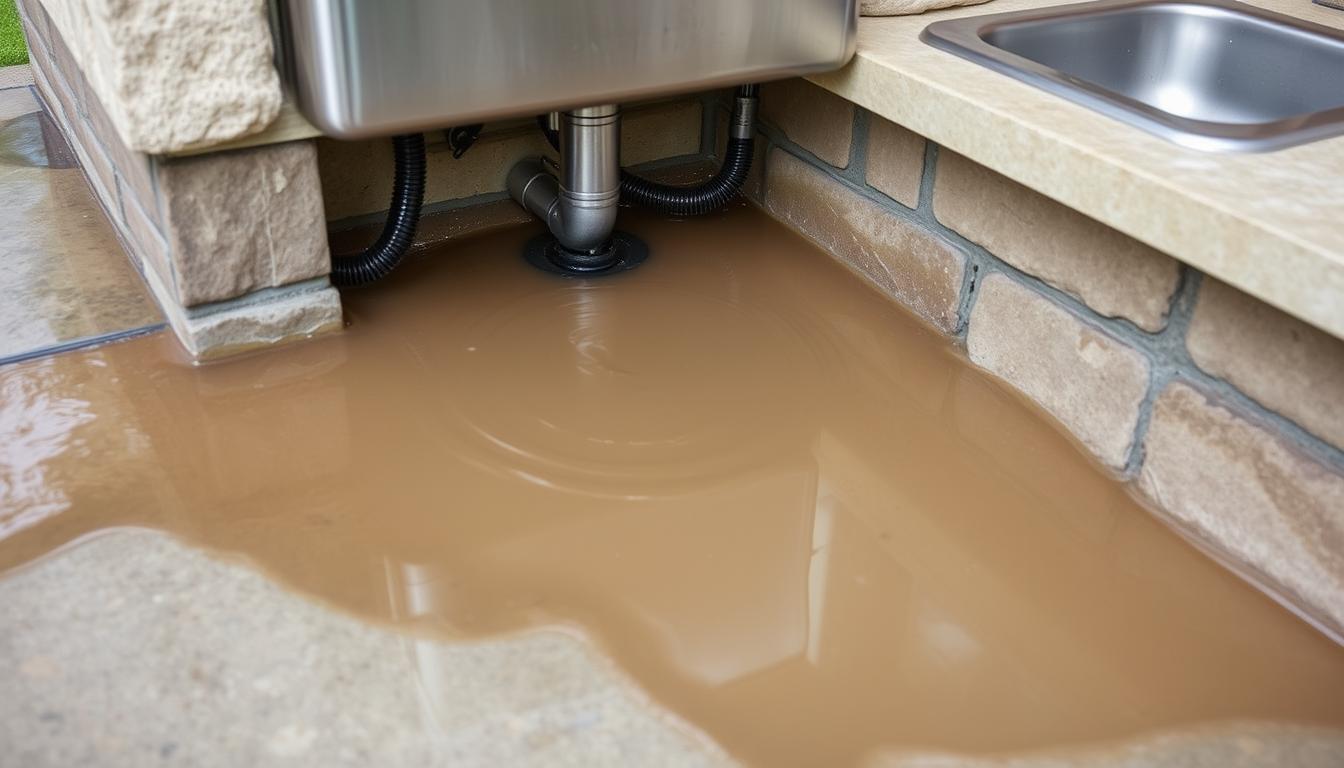
Poor drainage does not just create aesthetics; it can lead to mosquito breeding grounds, slip hazards, and even damage to your property’s foundation. That’s why choosing the right drainage solution is just as important as selecting the sink itself.
In this comprehensive guide, we’ll explore the 5 best drainage options for outdoor sinks, helping you make an informed decision that balances effectiveness, ease of installation, environmental considerations, and budget constraints. Let’s dive in and find the perfect drainage solution for your outdoor oasis!
Understanding Outdoor Sink Drainage Basics
Before we inspect specific solutions, it’s helpful to understand what makes outdoor sink drainage different from indoor plumbing.
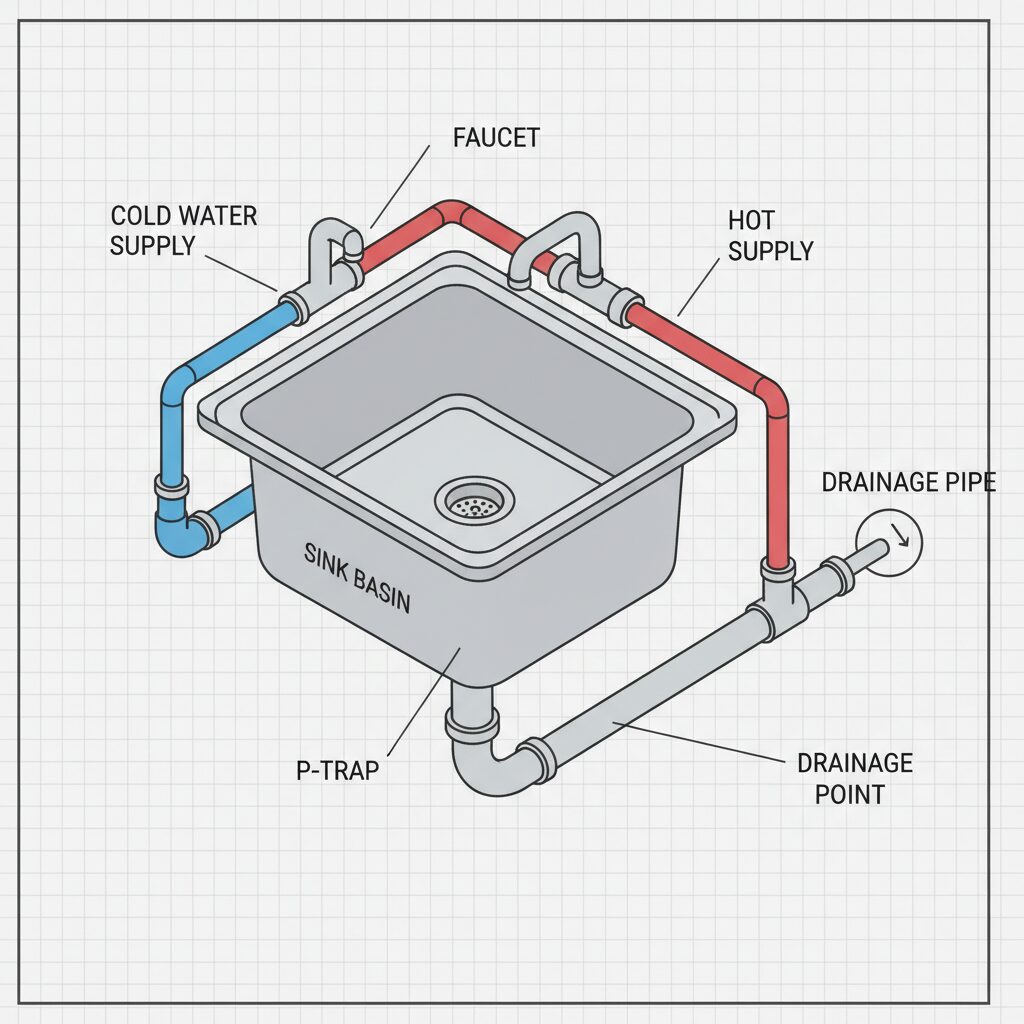
Key Considerations for Outdoor Drainage
- Weather resistance: Outdoor systems must withstand temperature fluctuations, UV exposure, and freezing conditions
- Environmental impact: How wastewater affects your landscape and local ecosystem
- Installation complexity: Some systems require professional help, while others are DIY-friendly
- Local regulations: Many areas have specific codes governing outdoor wastewater disposal
- Water usage: The volume of water you expect to use impacts which drainage option is most suitable
Now that we understand the fundamentals, let’s explore the best drainage options available for your outdoor sink setup.
The 5 Best Drainage Options for Outdoor Sinks
1. Direct Connection to Home Sewer System
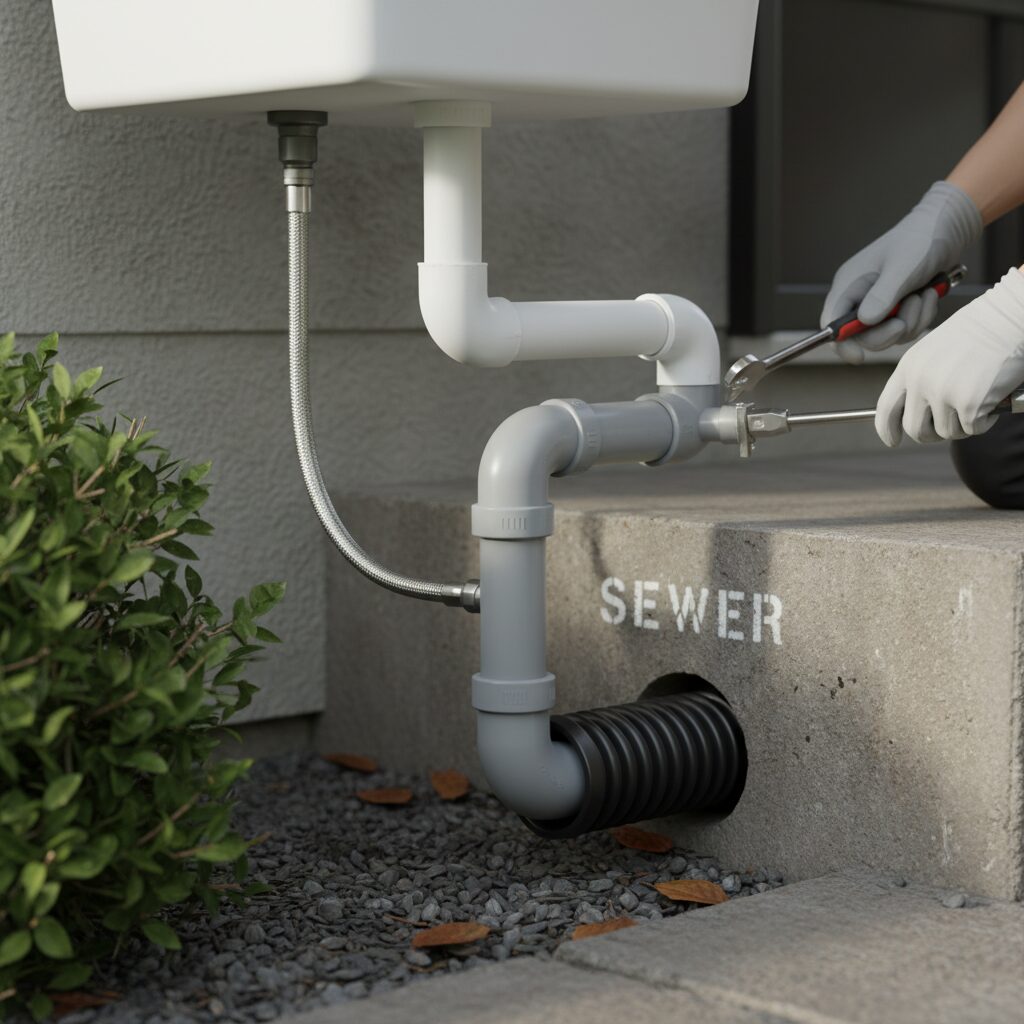
What It Is:
This method connects your outdoor sink directly to your home’s existing sewer or septic system, just like indoor plumbing.
Pros:
- Most efficient and code-compliant option.
- Handles all types of wastewater (including soap and food particles).
- No maintenance once properly installed.
- Works year-round in most climates.
Cons:
- Highest upfront cost.
- Requires professional installation in most cases.
- May need permits from local authorities.
- Difficult to implement if your outdoor sink is far from existing plumbing.
Best For:
This option is ideal for permanent outdoor kitchens close to the house, especially in areas with strict wastewater regulations.
Product Recommendation:
Danco Hydro Drain Outdoor Sink Drainage Kit ($89.99 on Amazon) includes everything you need to connect your outdoor sink to existing plumbing, including a P-trap, extension pipes, and weatherproof fittings designed for outdoor use.
2. Dry Well System
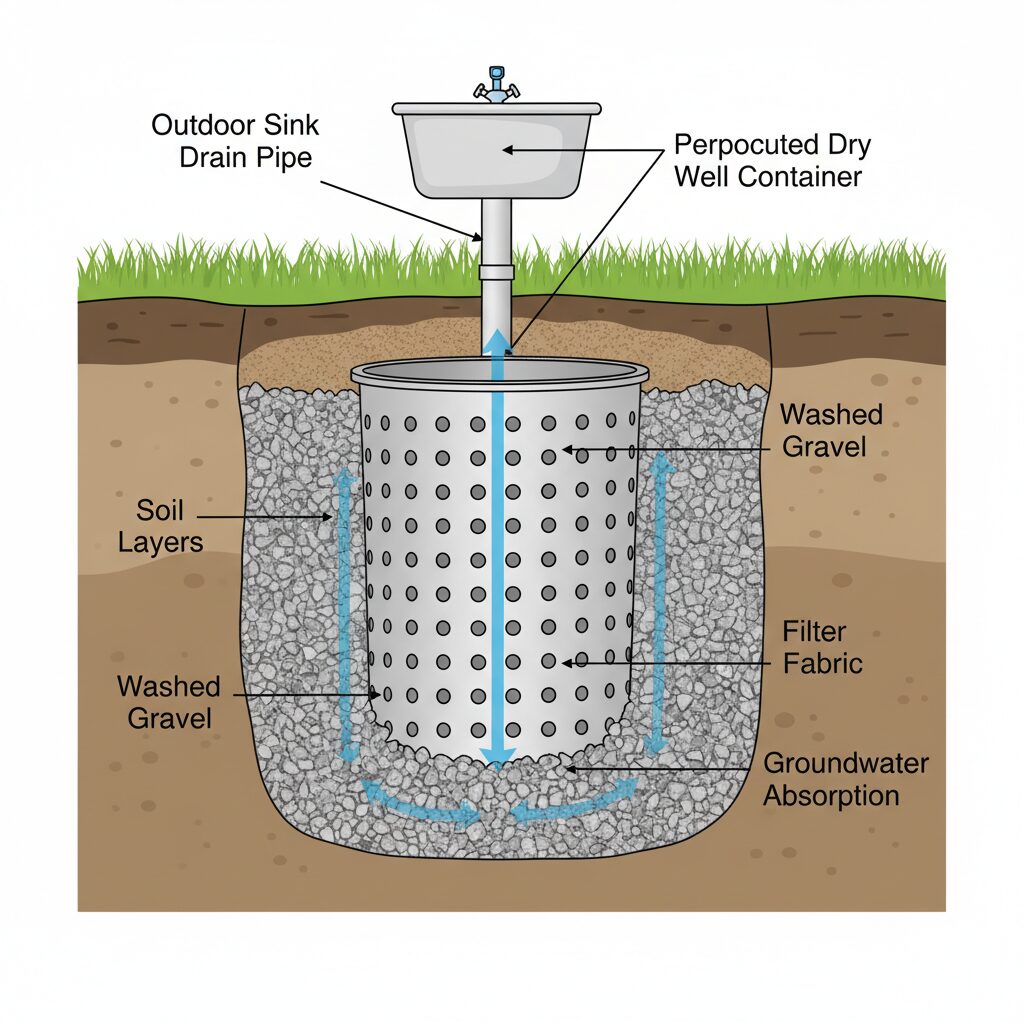
What It Is:
A dry well is an underground structure that collects and slowly disperses sink water into the surrounding soil.
Pros:
- Environmentally friendly option that returns water to the soil.
- Moderately DIY-friendly.
- No ongoing costs after installation.
- Works well for sinks with moderate usage.
Cons:
- Not suitable for areas with high water tables or clay soil.
- Requires adequate space for installation.
- May need periodic maintenance to prevent clogging.
- Not appropriate for wastewater containing many food particles or grease.
Best For:
Garden enthusiasts who use their outdoor sink primarily for hand-washing and plant care in areas with good soil drainage.
Product Recommendation:
NDS EZ-Drain Pre-Constructed French Drain ($64.99 on Amazon) provides an excellent foundation for a DIY dry well system with its pre-wrapped gravel design that prevents soil infiltration while allowing proper water dispersion.
3. French Drain
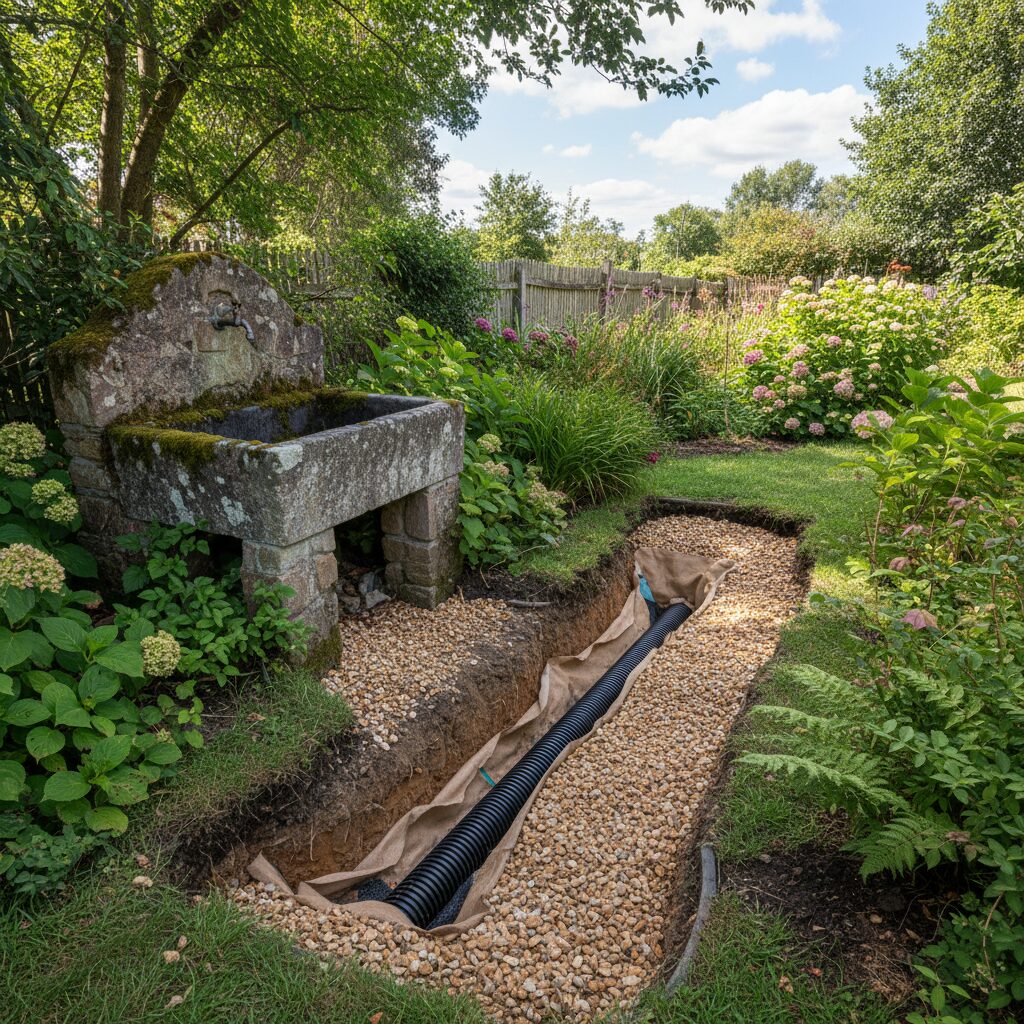
What It Is:
A French drain is a trench filled with gravel and a perforated pipe that redirects water away from your sink area to a more suitable drainage location.
Pros:
- Excellent for redirecting water to garden areas that need irrigation.
- More flexible positioning than a dry well.
- Can handle higher water volume than simple solutions.
- DIY-friendly with basic landscaping skills.
Cons:
- Requires significant digging and landscape disruption during installation.
- May clog over time if not properly filtered.
- Not suitable for wastewater with soap, chemicals, or food waste.
- Needs a proper slope to function effectively.
Best For:
Outdoor enthusiasts looking to conserve water by redirecting sink runoff to thirsty garden areas.
Product Recommendation:
Landscape Drainage Pipe Kit by Drainage Solutions ($39.95 on Amazon) includes 20 feet of perforated pipe, filter sleeve, and connectors—everything needed for a proper French drain installation.
4. Gray Water Collection System
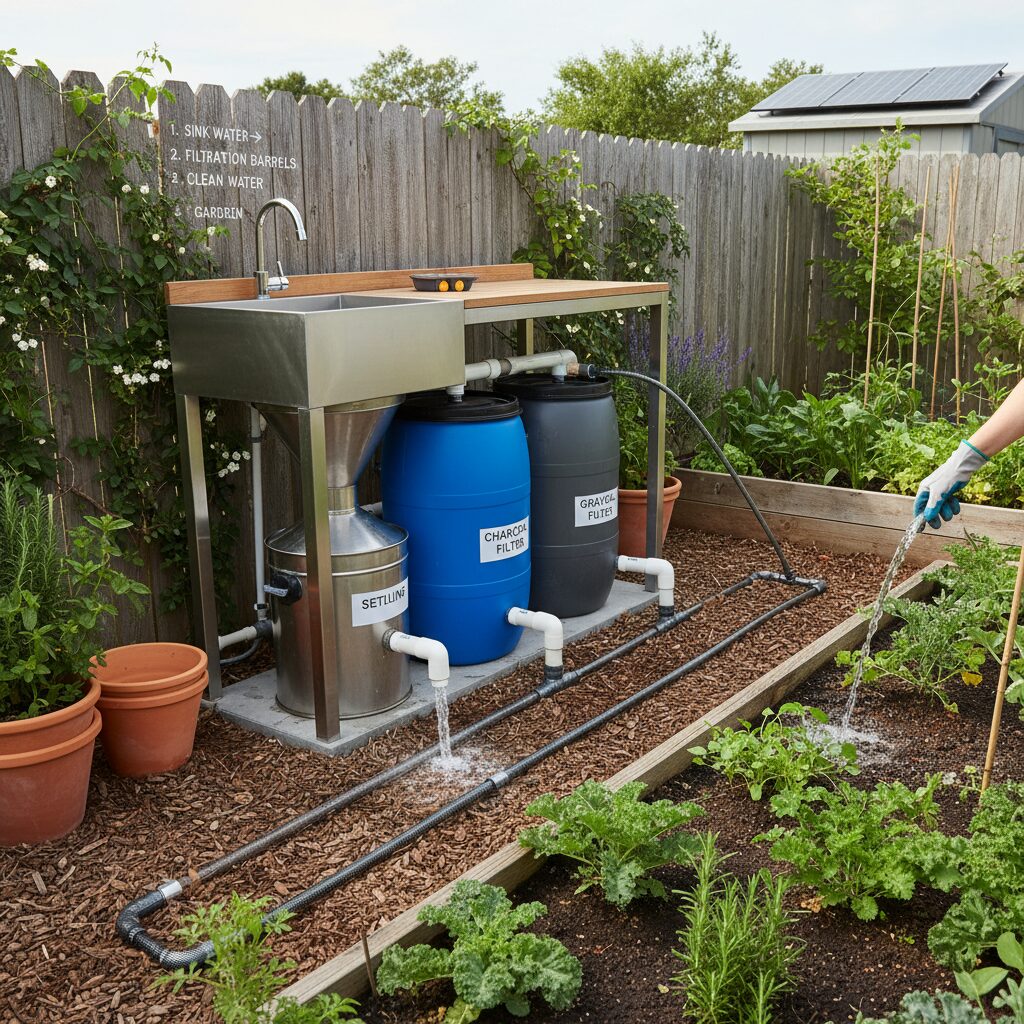
What It Is:
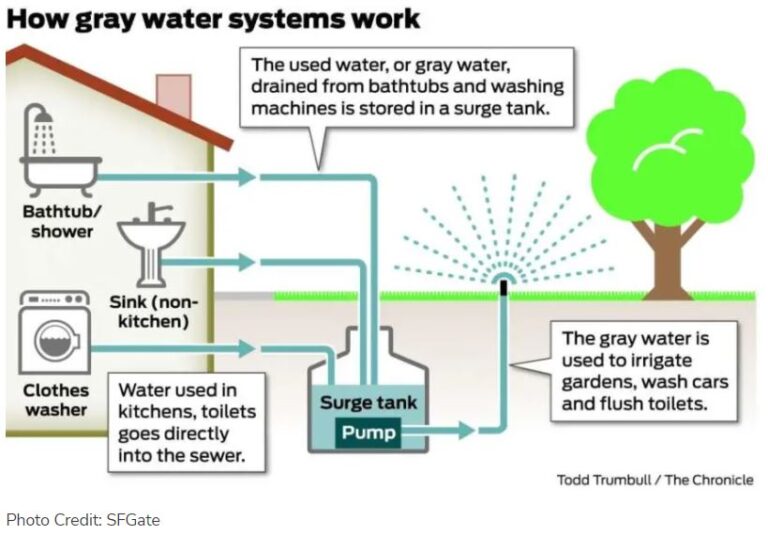
A system that collects sink wastewater (gray water) for reuse in landscape irrigation.
Pros:
- Most environmentally friendly option.
- Reduces water waste and lowers water bills.
- Great for drought-prone areas.
- Can be simple or sophisticated depending on your needs.
Cons:
- Requires careful consideration of what soaps/products you use.
- May require permits in some jurisdictions.
- Needs regular maintenance.
- Not suitable for all climates, especially freezing ones.
Best For:
Environmentally conscious homeowners with significant garden areas who want to maximize water efficiency.
Product Recommendation:
Aqua2use GWDD Greywater Diversion Device ($349.00 on Amazon) features a comprehensive filtration system that makes sink water safe for garden irrigation, with easy installation and minimal maintenance.
5. Self-Contained Portable Sink Systems
What It Is:
These all-in-one units include fresh-water tanks and wastewater collection in a single, portable package.
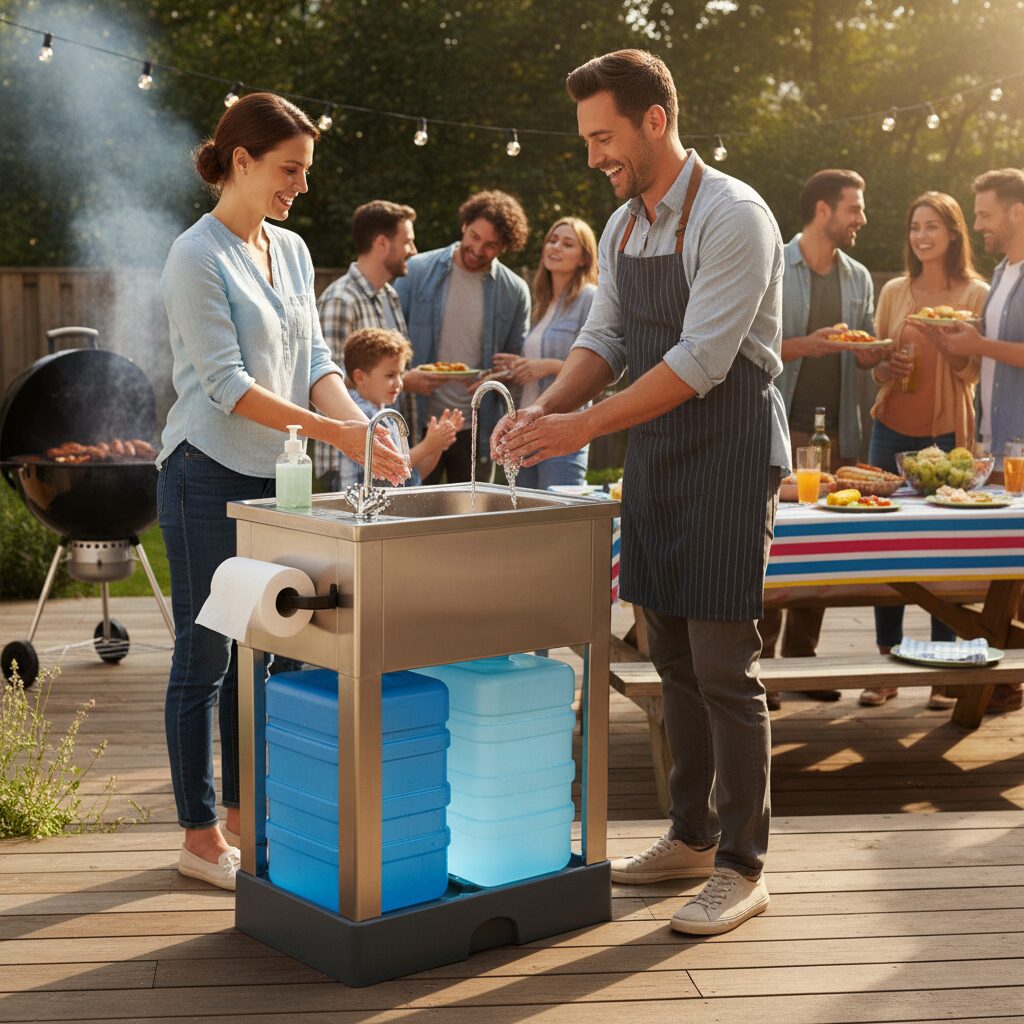
Pros:
- No installation required
- Fully portable for various outdoor activities
- No permanent impact on your landscape
- Perfect for temporary use or rental properties
Cons:
- Limited water capacity
- Requires emptying the wastewater tank regularly
- Not as convenient for frequent use
- Higher long-term cost than permanent solutions
Best For:
Renters, those who need occasional outdoor sink access, or homeowners who want flexibility in sink placement.
Product Recommendation:
Serene Life Portable Handwashing Station ($189.99 on Amazon) features a 5-gallon freshwater tank and a 5-gallon wastewater tank with foot-pump operation, making it perfect for outdoor entertaining, camping, or temporary garden use.
🔍 How to Choose the Right Drainage Option for Your Needs
Selecting the best drainage solution depends on several factors specific to your situation:
Assessment Checklist:
- Usage frequency: Daily use requires more robust solutions than occasional use.
- Water volume: Hand-washing needs different drainage than food prep or dish washing.
- Proximity to home: Options expand when closer to existing plumbing.
- Budget constraints: Initial installation vs. long-term maintenance costs.
- Environmental priorities: Water conservation may be paramount in drought areas.
- Local regulations: Check what’s allowed in your municipality.
- Soil conditions: Clay soil drains differently from sandy soil.
- Seasonal considerations: Will your sink be used year-round or seasonally?
Take time to evaluate each of these factors before making your final decision.
Installation Tips for DIY Enthusiasts
If you’re planning to install your outdoor sink drainage yourself, here are some helpful tips:
- Call before you dig: Always contact utility companies to mark underground lines.
- Consider slope: For any drainage system, maintain at least a 1/4″ drop per foot of pipe.
- Use appropriate materials: Outdoor plumbing requires weather-resistant components.
- Plan for winter: In cold climates, ensure pipes can be drained or are properly insulated.
- Filter first: Install a simple strainer or sediment trap to prevent clogs.
- Test before finalizing: Run water through the system to check for leaks or drainage issues.
- Document your installation: Take photos during the process for future reference if repairs are needed.
For complex installations, such as sewer connections, consulting a professional plumber is highly recommended.
Frequently Asked Questions
1- Can I just let my outdoor sink drain onto the ground?
While this is the simplest solution, it’s generally not recommended for regular use. It can create muddy areas, attract pests, and may violate local codes if you use soap or wash food items. For very occasional use with just clean water, it might be acceptable in some areas.
2- Do I need a P-trap for my outdoor sink?
If your outdoor sink connects to a sewer system, a P-trap is essential to prevent sewer gases from escaping. For other drainage methods, such as dry wells, a simple strainer is usually sufficient to catch debris.
3- What’s the most environmentally friendly drainage option?
A properly designed gray water system is the most eco-friendly option, as it reuses water that would otherwise be wasted. However, you must be careful about what soaps and products you use with this system.
4- Can I install an outdoor sink drainage system myself?
Simple systems like dry wells and French drains are DIY-friendly for those with basic handyman skills. However, connections to your home’s sewer system should generally be done by licensed plumbers to ensure code compliance.
5- How do I winterize the drainage for my outdoor sink?
In cold climates, outdoor plumbing should be winterized by shutting off the water supply, draining all pipes, and, if necessary, adding antifreeze to P-traps. Self-contained systems should be emptied and stored indoors during freezing weather.
Environmental Considerations
As outdoor enthusiasts, we have a responsibility to consider how our improvements impact the environment:
- Water conservation: Gray water systems and rainwater collection can significantly reduce water waste
- Soil health: Ensuring wastewater is properly filtered prevents soil contamination
- Chemical impact: Choose biodegradable, plant-safe soaps when your drainage returns water to the soil
- Local ecosystem: Consider how drainage might affect nearby plants, water features, and wildlife
Making environmentally sound choices not only protects our natural resources but often results in more sustainable and cost-effective solutions long-term.
Conclusion: Making the Right Choice for Your Outdoor Lifestyle
An outdoor sink can transform your backyard experience, making gardening, cooking, and entertaining significantly more convenient and enjoyable. The key to long-term satisfaction is selecting the right drainage solution that balances your practical needs, budget constraints, and environmental considerations.
Whether you opt for the permanence of a sewer connection, the eco-friendly approach of a gray water system, or the flexibility of a portable unit, proper installation and maintenance will ensure your outdoor sink remains an asset rather than a headache.
Take time to assess your specific situation, consult local regulations, and consider both your immediate needs and long-term plans for your outdoor space. With the right drainage solution, your outdoor sink will provide years of convenient service while protecting your property and the environment.
Ready to upgrade your outdoor living space? Choose one of the recommended drainage solutions above and take the first step toward a more functional and enjoyable backyard experience!
Related Articles